





74.5% → 17.5%
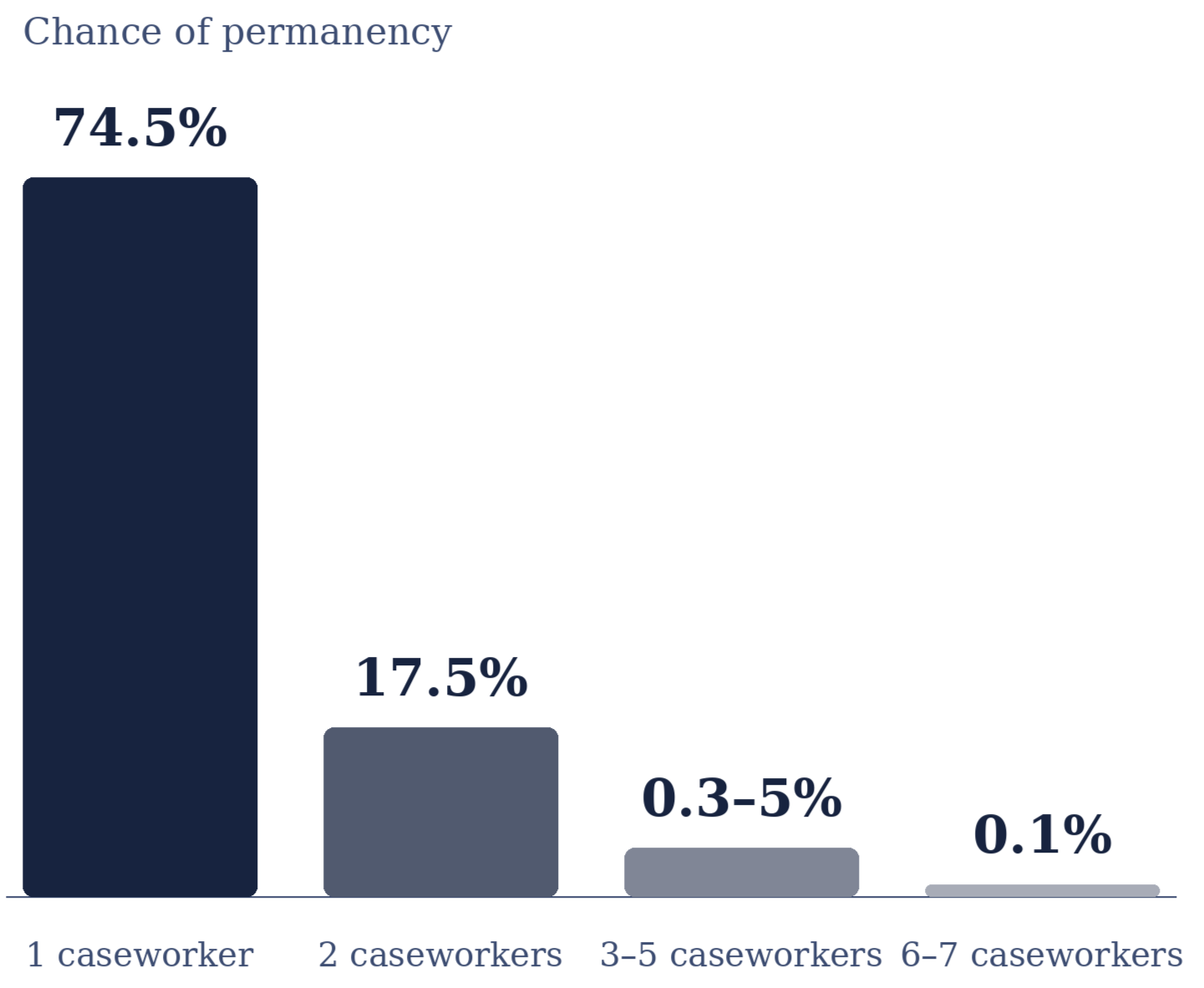
In one foster care study, 74.5% of children with one consistent caseworker reached permanency. With just two caseworkers, that number fell to 17.5% and continued to drop as turnover increased.
What if keeping families together included keeping child welfare workers, too?
Caseworker turnover is one of the clearest predictors of how long a family stays apart.
With six or seven caseworkers, a child's odds of permanency fall to 0.1%.¹ It's not only the number of caseworkers on a case. A 2025 University of Wisconsin study of 27,000 foster care cases found a child's odds of leaving foster care on time drop 28% in the year before their caseworker quits, and 55% in that caseworker's final month.²
Keeping a caseworker in place is one of the most direct levers this system has.
Who We AreTurnover doesn't just cost the agency. It costs the child.

Caseworker turnover is one of the clearest predictors of how long a family stays apart.
With six or seven caseworkers, a child's odds of permanency fall to 0.1%.¹ It's not only the number of caseworkers on a case. A 2025 University of Wisconsin study of 27,000 foster care cases found a child's odds of leaving foster care on time drop 28% in the year before their caseworker quits, and 55% in that caseworker's final month.²
Keeping a caseworker in place is one of the most direct levers this system has.